Amos Crane
Down Cemetery RoadAmos Crane is a government operative whose efficiency at concealing violence is matched by a capacity to make it personal. His work repeatedly turns people into problems to be managed or eliminated, yet his attachment to his younger brother Axel gives that ruthless method an intimate purpose—and ultimately directs him toward a fatal confrontation with Michael Downey.
Identity and Working Creed
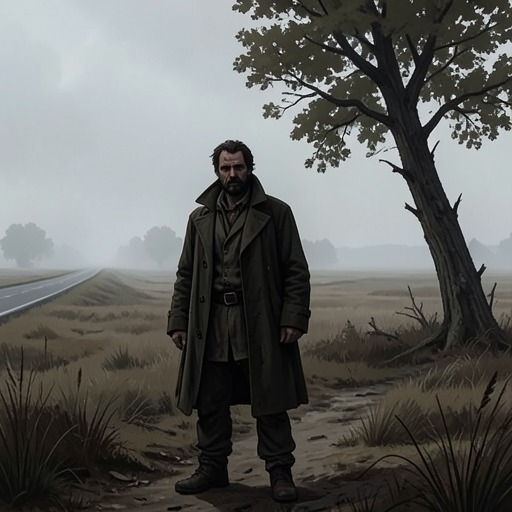
Amos is introduced as tall and grey-haired, with a crew cut and a face marked by what appears to be a wasting illness. The impression of physical decline is misleading: beneath it, his body is disciplined and functional. He rises early and runs three miles before breakfast, moving through London as its shops and night venues change shifts. Although he is not a Londoner and does not imagine himself as one, he regards the grocers opening their businesses and the dancers finishing theirs as people connected to him through a shared life beyond official schedules. He thinks of himself as their secret sharer, able to recognize their passions and treat them as equals.
That private sense of fellow feeling coexists with a starkly instrumental view of work. At his desk, Amos avoids overhead lights, working by an Anglepoise lamp and the glow of his computer screen. The computer, to him, is merely a tool: information can offer clues, but it cannot supply answers. Those require direct engagement with living people and physical reality. The contrast defines his method throughout the story: he can use bureaucratic systems and digital records, but he trusts action at close range more than the abstractions that organize it.
The Bombing and the Cover-Up
Amos’s role in the bombing of the Singleton house is divided between responsibility and control. Axel Crane made the field decision to use the bomb and had been given carte blanche, but Amos was described as holding the reins. The distinction matters to the operation’s aftermath: Axel chose a method that Amos later judged too difficult to control, while Amos took charge of making its consequences serve the agency’s purposes.
Dinah Singleton survived, and Amos interpreted that survival not simply as a failure of the plan but as an opportunity. He saw Dinah as still in play and proposed that she be used carefully. Howard doubted whether keeping an infant hidden could remain a workable solution: adults could disappear into plausible new lives, but a child’s disappearance was more likely to draw people into searching. Nevertheless, the official explanation was meant to hold through the police, the local press, and an inquest, with national security invoked to suppress inconvenient questions.
The practical repair fell to Amos. He arranged for Dinah to be removed from hospital, fashioned a cover story, and managed Howard’s perception of who was doing the work, allowing Howard to take credit because that helped keep him calm. Amos’s design turned the girl’s survival into bait: Michael Downey was expected to come looking for her, and Amos intended to make that search lead Downey into a trap. The cover-up and the pursuit were therefore parts of one plan—first conceal the bombing’s aftermath, then exploit the one survivor who might draw the man Amos wanted to eliminate.
Axel's Death and the Turn to Revenge
Amos’s attachment to Axel is clearest after Axel is killed. At the house where his brother died, Amos studies the faint blood on the floor, which seems to reduce Axel’s head to a stencil. He knows that Axel’s violent end had long been foreseeable, and can see that the householder is not responsible simply because the death happened there. But that detached judgment does not hold: Amos decides that he will blame whoever he chooses. Howard treats Axel’s death as the closing of a loose end; Amos answers that the end must have frayed. The exchange marks a shift from managing the operation to grieving through retaliation.
Amos had not wanted Axel dead. For years he had played the older brother who calmed others when Axel went too far, especially because Axel seemed to enjoy the violence that bureaucrats wanted carried out but did not want to see enjoyed. Even so, Amos regards Axel’s killing of Joe Silvermann as justified within the brutal rules they share: Joe had been hired by Sarah Trafford to investigate, and Amos judges Axel’s response both effective and an exemplary way of avoiding further harm to civilians. The fact that this line of reasoning has ended with Axel dead does not make Amos renounce it. He accepts the logic of the act while turning its consequence into a private obligation.
That obligation becomes a hunt for Michael Downey. Amos says he is mourning and, at the same time, looking for the person who put him in mourning; he makes no effort to disguise the personal nature of the pursuit from Howard. He begins mapping hotels in Worcester, using the station as a centre for his search, though Howard argues that Downey will eventually come to him. Amos sees the practical work of hunting as a form of vigil: rather than sit beside Axel’s body, he prepares to find Axel’s killer. He intends to tell Downey that the pursuit is being carried out for love.
The conflict with Howard turns physical when Howard points out that Amos has few allies in the Ministry and that people were relieved when Downey killed Axel. Amos jabs Howard in the throat, watches him struggle for breath, and threatens to kill him if he interferes. His threat is not merely an outburst: Amos says he will find Downey, whether immediately or when Downey comes for Dinah Singleton, and kill him. By then, the plan to use Dinah as bait has become inseparable from Amos’s revenge. He expects Downey to come looking for her, and intends to make that search deliver his brother’s killer into his hands.
Fieldwork, Euphemism, and Close Violence
Amos’s work reaches beyond office plans into the exposed, physical world he trusts more than a computer screen. On the journey to the Farm, the boat looks tiny against the water, and the island is eight miles from the nearest town. Amos is afraid of drowning: he remembers having drowned a man in a hotel bathroom, watching the victim thrash and struggle for breath over several minutes. The memory gives his fear a practical, brutal source. Once back on dry land, he turns to the business of concealment, sending Howard a memo about what happened in Oxford and choosing the word “neutralized,” a bureaucratic euphemism he knows Howard dislikes because a journalist could read it as “killed.” The memo also says that Axel killed the detective; Amos makes the language serve the cover-up even as its wordplay exposes the violence beneath it.
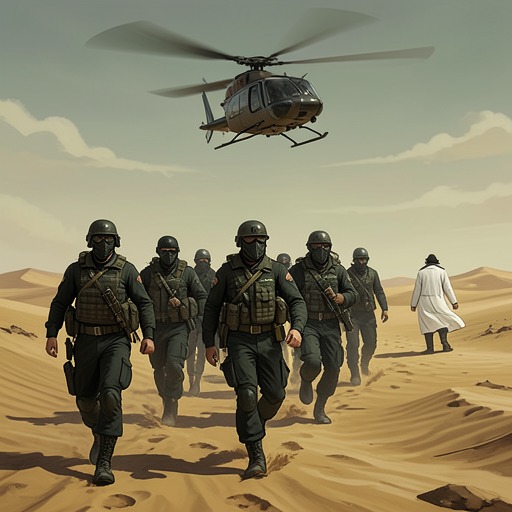
The Farm itself is a low, largely underground building on the island, approached by a rough pebbly beach. Amos remembers earlier visits by helicopter, when the pilot showed him the controls, but now budget restrictions have ended that privilege. He regards the place as a remnant of a more secretive order: its builders had prepared for bombs from the sky and trusted the rock for protection. He does not know, or care to establish, its original purpose, though the abandoned facility suggests that something dangerous was once investigated there. Its history remains obscure; what matters to Amos is that it offers a secluded setting for the agency’s present business.
At the Farm, Amos’s composure takes the form of sudden, economical force. As he and a large man pass through a doorway, Amos pauses and lets the other man go ahead. He drops a toy bear and, while the man’s attention is displaced, pulls a plastic bag over his head, kicks his knees from beneath him, and tightens the bag as the man claws at it. Amos bends close to watch him die and asks whether he can hear him. The killing makes plain what his creed of closing with flesh and bone means in practice: directness is not compassion or restraint, but a preference for violence he can personally control.
The Hunt and the Chapel
Amos’s pursuit of Michael Downey becomes a practical hunt as well as a vendetta. Searching a hotel chain’s database, he finds a couple who paid cash for a double room without reservations or luggage, registered under the name Smithson. He treats the lead as a one-shot chance: if Downey and Sarah Trafford have already moved on, he expects to lose them again. He drives through the night toward the hotel, imagining it as an ocean-going ship pressing through darkness, but dismisses the fancy in favour of the immediate work ahead. His meticulous attention to the details of a temporary identity and a hotel register shows the same facility for turning ordinary systems into instruments of pursuit that had enabled him to conceal the bombing’s aftermath.
On the way to the final encounter, Amos kills David Keller, a man who had given him a lift, and takes both his identity and his car. The killing is committed without reflection or regret: Amos needs a temporary identity and a vehicle, while Keller can no longer use either. The consequence is sharply ironic: Sarah and Zoë Boehm also needed a lift, but the man who might have helped them is dead. Amos’s utilitarian reasoning reduces a person to whatever can be taken from him, even as the theft carries him toward the chapel where his own pursuit will end.
When Amos walks down the track to the chapel, he expects the meeting with Axel’s killer to release him into a sudden, thoughtless rush of violence. Instead, he experiences the familiar sharpening of detail and senses. Sarah recognizes in his smile the earlier threat of Rufus—Axel Crane in disguise—and feels the journey has returned to its starting point. Amos takes Zoë’s pistol before she can reach it; Michael reaches for a weapon, while Zoë’s gun is held against Sarah. The confrontation momentarily gives Amos control of the room, but not of its outcome.
Amos tells Zoë that he dreamed about her, and the disclosure makes her eyes flicker. He uses that instant to drop to the floor and seize a gun, intending to kill Zoë and make Michael suffer slowly for killing Axel. Zoë does not hesitate: she shoots Amos, who ceases to be a threat. His final effort to turn grief into a carefully staged act of revenge ends in the same close, physical violence that has defined his work, but this time another person acts first.
Narrative Role and Significance
Amos’s private vocabulary exposes the fracture between his professional habits and his attachment to Axel. He thinks of people as blips that can be erased from a screen, yet after Axel’s death insists that his brother was never meant to become one of them. The image turns an impersonal language of disappearance into a measure of grief: Amos can plan around other people’s removal, but cannot absorb Axel’s as routine. His response is to convert loss into a hunt for Michael Downey, making revenge the action through which he can express what he cannot set aside.
Anonymity as a Performance
Amos’s fieldcraft depends not on becoming literally invisible but on deciding which details witnesses will retain. He remembers a job carried out in full view of four people: afterward, they could describe the bright red scarf he wore, while everything else about him remained ghostlike. At the hotel, he applies the same understanding of attention in reverse, carefully buttoning his raincoat because he knows such a detail may linger in someone else’s memory. His cover name, Smithson, carries a similar trace of deliberate construction: it sounds as though someone began to say Smith and corrected himself half a beat later. These choices reveal a practitioner who treats identity as something assembled from the impressions other people are likely to keep.
That confidence is sharpened by a gambler’s sense of risk. Axel had once told him, “Never let them tell you it’s not a game,” and Amos recalls the phrase as he heads toward the hotel, accepting that the search is a one-shot chance. He does not expect his desk to be waiting for him when he returns, a sign that he understands the pursuit may end his place in the official world even before it ends his life. The game metaphor does not make his violence playful; it gives uncertainty a structure he can act within, turning exposure, consequence, and chance into parts of the same wager.
The Body Against the Plan
At the chapel, Amos’s confidence in close action briefly becomes a liability. He has his own gun strapped beneath his right arm, yet has chosen to enter holding Zoë Boehm’s pistol, drawn by the thrill of the risk. When he drops, he does so abruptly rather than stooping, and the impact on the dusty stone floor injures his knees. He reaches for the weapon intending to control what happens next, but Zoë fires before he can use it. The scene turns his creed of acting through direct physical contact against him: the body he trusts as a tool is suddenly hurt, and his familiarity with guns cannot compensate for the instant he has misjudged.